
Product Carbon Footprint, LCA, EPD, Green Claims, and Digital Product Passport: The Essential Guide
For three decades, sustainability meant annual reporting. Today, it is a product requirement. Buyers, procurement teams, and regulators now demand verified, product-level evidence — not corporate statements.
Across industries, customers increasingly choose products not only for performance and price, but for proven environmental impact. That makes product sustainability a direct driver of market access, competitiveness, revenue growth, and long-term business agility.
That shift creates a new commercial reality.
“The companies that can deliver credible product sustainability evidence the fastest win.”
The win does not come from publishing more documents and certificates that stakeholders cannot use. It comes from building decision-ready product data that procurement, sales, design teams, and customers can actually trust.
What Do LCA, PCF, EPD, and DPP Mean?
These terms are often used interchangeably — but they serve distinct purposes along the product sustainability chain.
LCA – Life Cycle Assessment
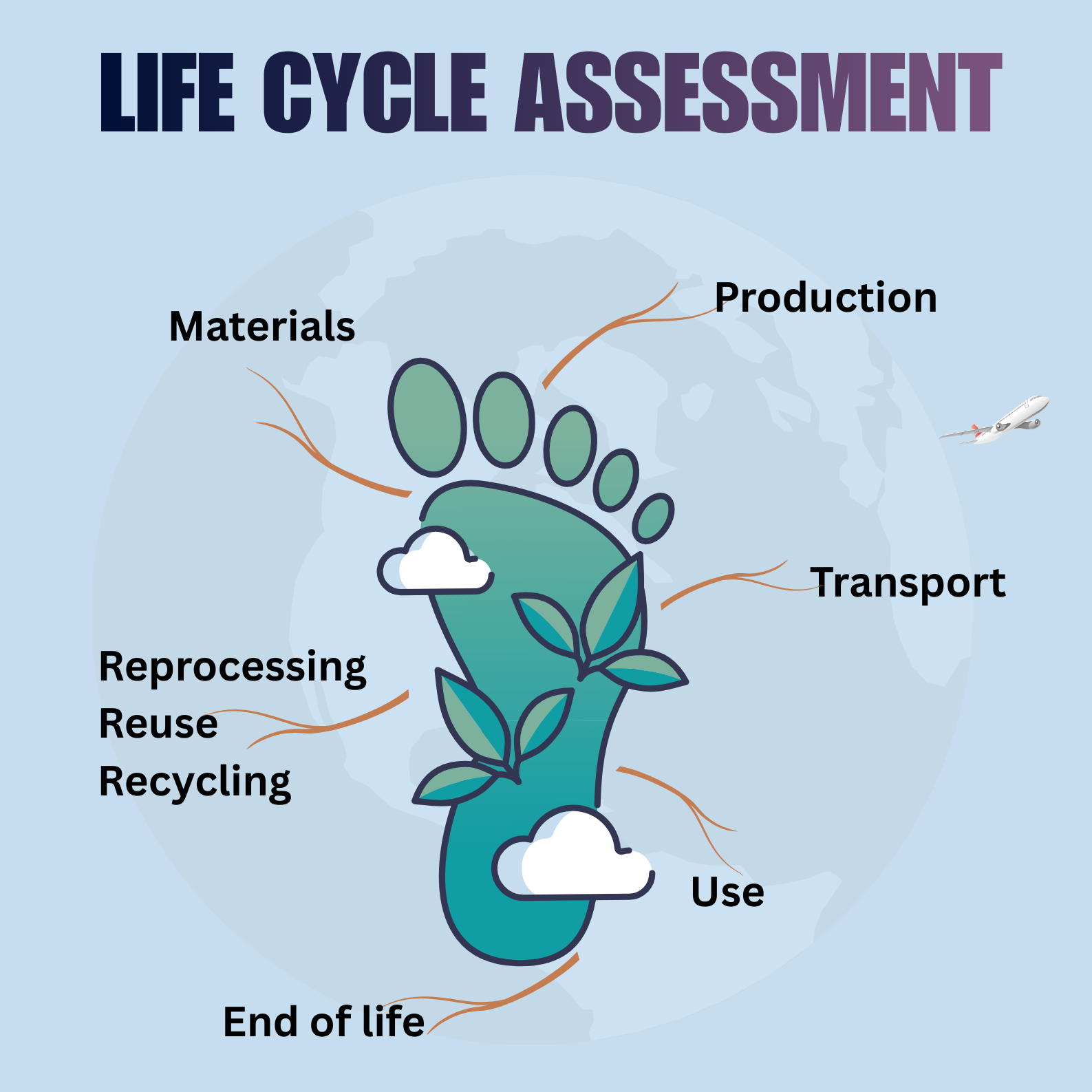
LCA is the scientific foundation of product sustainability. It is a structured method to quantify environmental impacts across the full life cycle of a product — from raw material extraction and manufacturing, through use, to end-of-life and material recovery.
PCF – Product Carbon Footprint
The product carbon footprint (PCF) is a key result derived from LCA — specifically the climate impact expressed in carbon dioxide equivalent (CO₂e). It is the most requested sustainability metric in tenders, supplier approvals, and customer evaluations today.
EPD – Environmental Product Declaration
An EPD is a standardised, market-facing declaration based on LCA rules. It is commonly required in construction and increasingly demanded across industrial value chains, including:
- Cement, concrete, steel, and aluminium
- Insulation, glass, windows, and façade systems
- Flooring, paints, adhesives, and sealants
- Plasterboard, timber, and roofing materials
DPP – Digital Product Passport
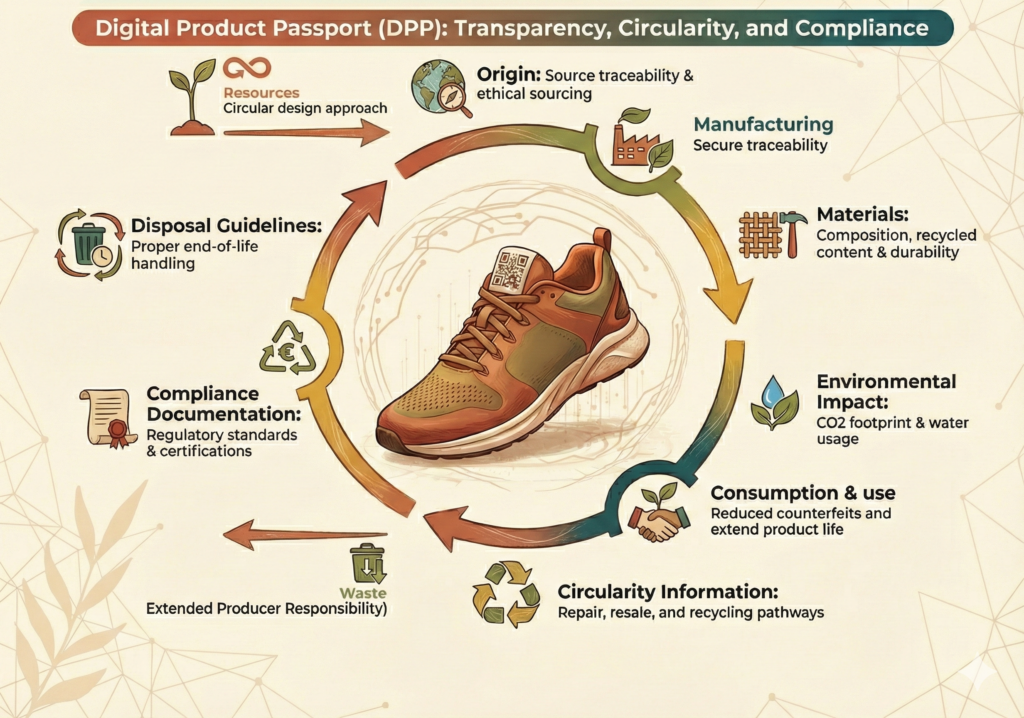
The Digital Product Passport (DPP) establishes a new era of structured product information — combining sustainability data, traceability, and compliance documentation into a data carrier that accompanies the product across the entire value chain. The European Ecodesign for Sustainable Products Regulation (ESPR) is the cornerstone policy enabling this shift.
“LCA provides credibility → PCF enables comparability → EPD supports market communication → DPP enables scalable transparency.”
Why Product Sustainability Evidence Is Becoming Non-Negotiable
The demand for product-level sustainability data is not a trend. It is already reshaping how industrial and product markets operate. Three major regulatory drivers are accelerating this shift:
- CBAM (Carbon Border Adjustment Mechanism) moves to its definitive regime from 2026, requiring producers and manufacturers to demonstrate embedded emissions and maintain product-level data readiness.
- PPWR (European Packaging and Packaging Waste Regulation), applying from 2026, tightens requirements on packaging design, recyclability, and waste reduction across the entire value chain.
- ESPR (Ecodesign for Sustainable Products Regulation), already in force since 2024, introduces the path toward Digital Product Passports across multiple sectors.
But beyond regulation, the strongest pressure is commercial:
“Customers increasingly expect suppliers to prove product impact — not simply publish sustainability statements.”
The Real Challenge: Speed Is Easy, But Credibility Is Hard
Most companies do not struggle because they lack ambition. They struggle because scaling product sustainability work creates three painful trade-offs.
1. The “Expert-Only” Trap
Deep LCA tools are extremely powerful, but many require specialist modelling, long lead times, and heavy internal effort. This slows decision-making and blocks scale across large product portfolios.
2. The “Fast but Fragile” Trap
Many LCA solution providers promise quick results — but deliver them with critical limitations:
- Weak transparency around assumptions
- Hard-to-defend system boundaries or allocation logic
- Low confidence in comparability across products or suppliers
- Outputs that sales teams and customers hesitate to use
3. The “Corporate-First” Trap
Many sustainability platforms are optimised for corporate carbon reporting. Product-level insights become an add-on — often manual, inconsistent, and difficult to scale across hundreds or thousands of SKUs.
In practice, companies end up with product sustainability results that are either credible but too slow, or fast but not trusted.
What Good Looks Like: Trusted Product Sustainability Data
When product sustainability becomes commercial, the bar shifts. Product-grade sustainability data must be:
- Comparable across suppliers, materials, and product designs
- Traceable with transparent assumptions and methodological control
- Scalable across portfolios — not one product at a time
- Scenario-ready for real decisions on recycled content, energy mix, and design alternatives
- Exportable into buyer-ready documentation
- Reliable under scrutiny from customers, auditors, and procurement teams
The true value is not only the number — it is the confidence to act on it.
Cappi’s Proven Approach: Speed and Credibility — at the Same Time
Cappi’s advisory services were built on a single, essential commitment:
“Deliver credible product carbon footprint insights for companies to conquer the market.”
This requires two capabilities delivered simultaneously: speed for business advantage and credibility for market trust. Most platforms choose one. Cappi is engineered to deliver both.
How Cappi Differs from Existing Solutions
- Specialist LCA software is powerful for modelling depth, but often too heavy for rapid portfolio decisions and everyday business use.
- Construction-focused sustainability tools are strong for EPD workflows, but not always built to scale consistent SKU insights across multiple industrial sectors.
- Corporate ESG platforms support reporting maturity, but frequently struggle to deliver product-grade, scenario-ready insights without significant manual work.
The new requirement is product sustainability at scale: real-time decisions + consistent modelling logic + exportable outputs + full defensibility. That is what Cappi was built for.
Pulse: Real-Time Product Carbon Footprint Insights
Pulse delivers real-time product insights to support decisions today. It transforms corporate GHG emissions data into actionable product carbon footprint results immediately — while most tools still produce fragmented information and slow reporting cycles.
LCA CoPilot: Deep Credibility When It Matters Most
When your sustainability results must stand up to procurement teams, customers, and auditors, Cappi’s LCA CoPilot provides the depth, structure, and transparency required. Your organisation can move fast and remain fully confident that results are defensible.
Sustainability Wins Contracts When It Is Backed by Trusted Data
The companies that lead the next phase of industrial sustainability are not those with the most reports. They are the ones who can answer — credibly and fast:
- What is the product carbon footprint of this product?
- Which supplier change delivers the greatest impact reduction?
- Which design scenario improves environmental performance without hurting commercial performance?
- Can we defend these results to customers and auditors?
Cappi is committed to delivering credible product sustainability insights that drive real market competitiveness.
If your business is preparing for product-level requirements — PCF, LCA, EPD readiness, and DPP foundations — Cappi helps you move from effort to true advantage: Fast. Consistent. Defensible. Decision-ready.
Connect with our team: connect@cappi-sustainability.com

 English
  Dutch
Dutch  German
  Spanish
  French